


Home / Partnerships / Financial Resilience Partnership / Theory of Change Report
Theory of Change Report
A detailed summary of the co-produced Financial Resilience Theory of Change for North Northamptonshire.
Report purpose
A shared framework for change
Following a recommendation from the Health and Wellbeing Board, North Northamptonshire Council commissioned Accommodation Concern to develop a co-produced Theory of Change for Financial Resilience in North Northamptonshire.
The report brings together local evidence, service mapping, stakeholder engagement and lived-experience insight. Its purpose is to give partners a shared account of what financial resilience means locally, where the system helps or blocks people, and how crisis support can connect into longer-term resilience.
It is also intended to act as a foundational document for the North Northamptonshire Financial Resilience Partnership, including its purpose, priorities, governance principles and future measurement approach.

The red kite used in the work reflects resilience, recovery, adaptation and renewal when the right conditions and support are in place.
Definition
What financial resilience means here
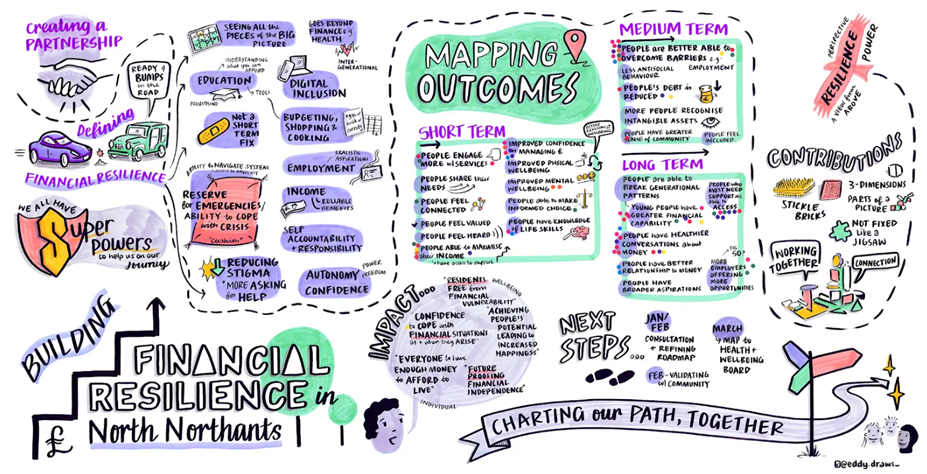
Building financial resilience means helping people handle money day to day, get through unexpected costs or changes, and access the right skills, confidence and support.
The report is clear that financial resilience is not simply budgeting or financial literacy. In North Northamptonshire it is shaped by income, debt, housing costs, disability, health, employment, digital access, transport, public service design, stigma and structural inequality.
- Practical capabilityPeople need the knowledge, confidence and support to understand options, deal with bills, manage commitments and make informed choices.
- Enough stabilityFinancial resilience depends on income adequacy, manageable debt, secure housing and the ability to cope with shocks.
- Timely helpAdvice and crisis support need to be easy to reach before problems escalate into homelessness, unmanageable debt or serious hardship.
- Fairer conditionsSome people face extra challenges or unfair barriers, including disability, poor health, digital exclusion, transport barriers and insecure work.
Co-production
How the report was developed
Co-production was central to the project. The report was shaped through larger workshops, smaller thematic focus groups, service mapping, stakeholder input and direct involvement from people with lived experience.
The first main workshop, held on 8 December 2025, explored what financial resilience meant in people's own words. The second workshop, held on 12 January 2026, tested the draft definition, refined the language and narrowed the wider outcome set into a smaller group of priority outcomes.
Four smaller thematic groups then went deeper into Benefits and Crisis Support, Debt Advice, Mental Health and Wellbeing, and Employment and Skills. These sessions explored practical barriers such as repeated storytelling, digital-first systems, inconsistent work coach support, warm handovers, debt journeys, stigma and the emotional burden created by administrative systems.
- Two large co-production workshops
- Four thematic focus groups
- Experts by experience and frontline practitioners
- Personas used to stress-test resident journeys
- Independent facilitation to create a reflective space
- Future co-production recommended through the partnership
Local context
Why North Northamptonshire needs this approach
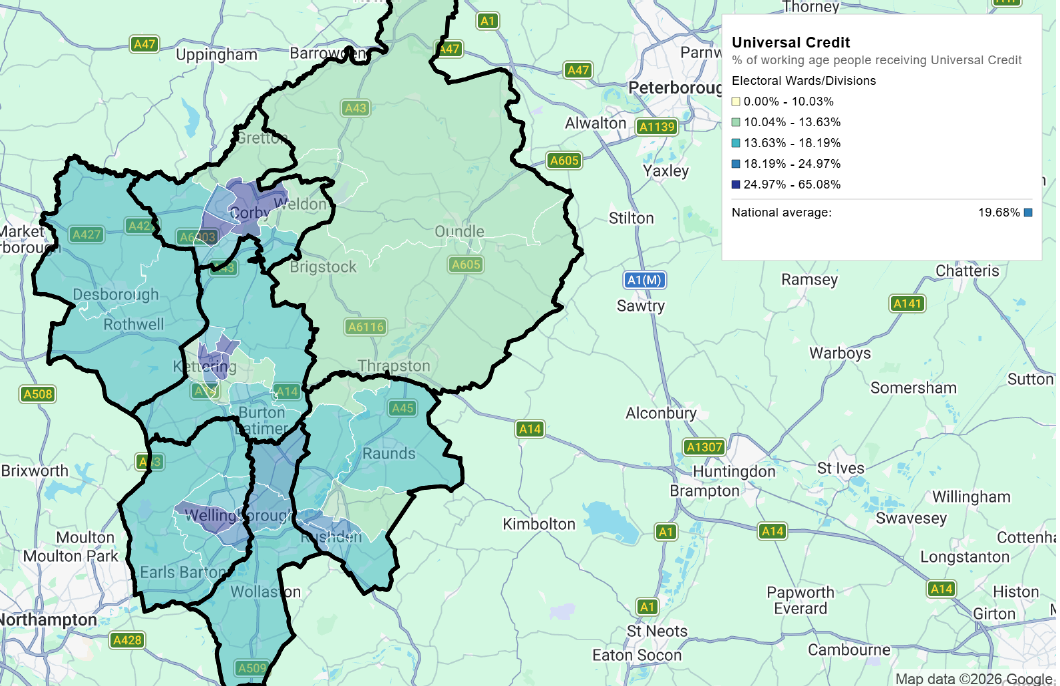
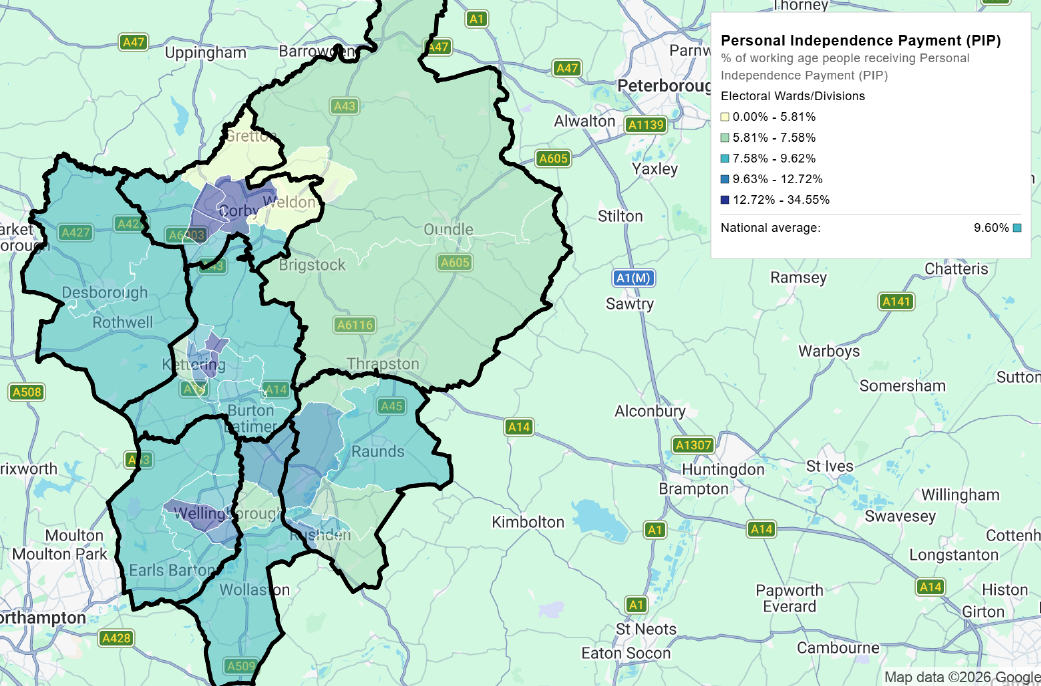
The report shows that financial resilience pressures are not evenly spread. They are concentrated in places where deprivation, poor health, disability, child poverty, low skills, housing cost pressure, fuel poverty and weaker access to opportunity overlap.
It identifies particular pressures around Corby, Wellingborough West and parts of Kettering, while also recognising rural barriers such as transport, off-grid fuel costs and distance from services.
Children, families and low-income households are central to the local picture. The report also connects financial resilience to skills, employment, health, disability, fuel poverty, housing costs and place-based access.
- Children and familiesLow income, benefit rules, school holiday costs, food insecurity and housing pressures can combine to make families vulnerable to repeated crisis.
- Skills and employmentFinancial resilience is affected by whether people can access, sustain and progress in work, especially where transport, health or low skills are barriers.
- Health and disabilityPoor financial resilience can worsen health, while long-term conditions, disability and caring responsibilities can increase costs and limit options.
- Fuel, housing and placeRent shortfalls, fuel poverty, heating oil exposure, transport costs and neighbourhood inequality all shape whether people can withstand shocks.
System map
Not a blank page, but not joined up enough
The report maps a broad ecosystem of support across advice, crisis payments, housing, health, mental health, family support, employability, food support, warm spaces, credit unions and community infrastructure. The challenge is not that nothing exists. The challenge is that people do not always experience it as coherent, accessible or preventative.
- Specialist debt, benefits and housing advice
- Crisis payments and household support routes
- Food banks, community meals and warm spaces
- Health, mental health and wellbeing services
- Family hubs, youth and children's support
- Employment, skills and work-and-health support
- Credit unions and safer financial services
- Community hubs and trusted local venues
Barriers
What gets in the way
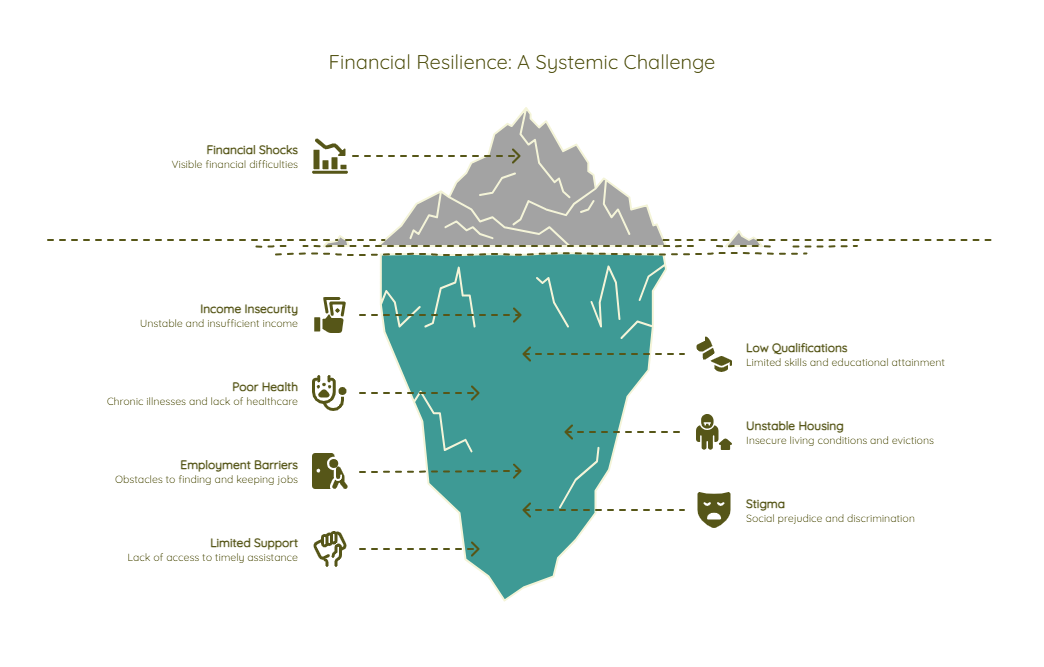
The co-production work found that improving financial resilience requires more than giving people information. The system needs to be easier to navigate, better connected, less stigmatising and more responsive to the realities of inequality, health, disability and exclusion.
- Digital exclusionDigital-first systems, online forms, broadband costs and limited confidence can exclude people from support.
- Transport and placePoor transport affects access to advice, skills, jobs, appointments and community support.
- Fragmented systemsPeople often repeat the same information to different services, with processes that do not talk to each other.
- Lack of continuityDifferent workers, weak handovers and limited advocacy can leave people feeling unheard or abandoned.
- Stigma and fearShame, past poor experiences and fear of judgement can stop people asking for help early.
- Low confidence and capabilityFinancial education, life skills and confidence matter, but cannot be separated from wider pressures.
- Health and mental wellbeingStress, anxiety, disability and physical health problems can make money, housing and debt problems harder to manage.
- Insecure income and costsLow wages, benefit issues, rent, food, fuel and unexpected costs limit people's room for manoeuvre.
- Employment barriersLocal opportunity, health, caring responsibilities, skills and transport all affect whether work improves resilience.
- Short-term crisis cyclesRepeated emergency support without follow-on advice can stabilise the moment but leave the underlying problem unresolved.
Central logic
Turning crisis contact into engagement
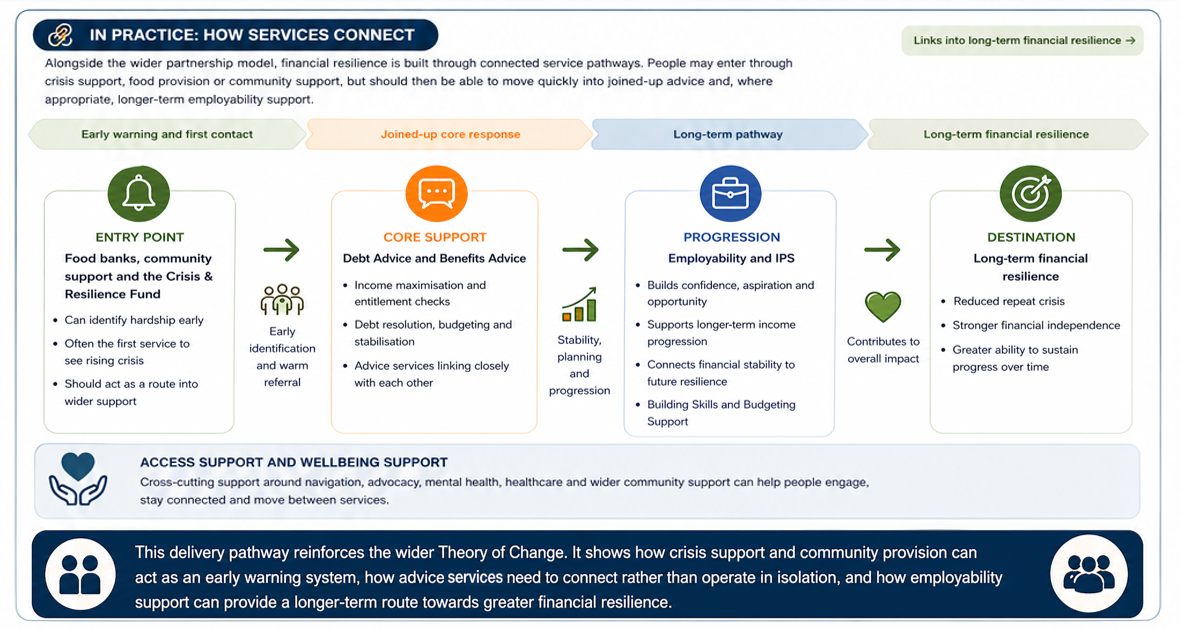
The report argues that North Northamptonshire should reduce the effective price of accessing crisis support. People in acute hardship should not have to navigate long forms, repeated evidence requirements and multiple retellings before receiving help.
The Theory of Change reframes crisis contact as a trusted opportunity for engagement. Immediate help should still be quick and dignified, but that same contact should identify wider needs and connect people through warm handovers into advice, income maximisation, debt support, housing help, budgeting support, mental health support or employability support.
- Immediate stabilisationFood, warmth, safety, crisis payments, housing payments or urgent support can stop the situation worsening.
- Wider needs identifiedThe contact should reveal whether the person also needs advice, benefit checks, debt options, housing support or wellbeing help.
- Warm handoverPeople should be connected to the right support rather than signposted into another confusing system.
- Prevention and resilienceFollow-on support should reduce repeat crisis, maximise income, reduce debt, improve confidence and build stability.
Contribution model
What the partnership adds
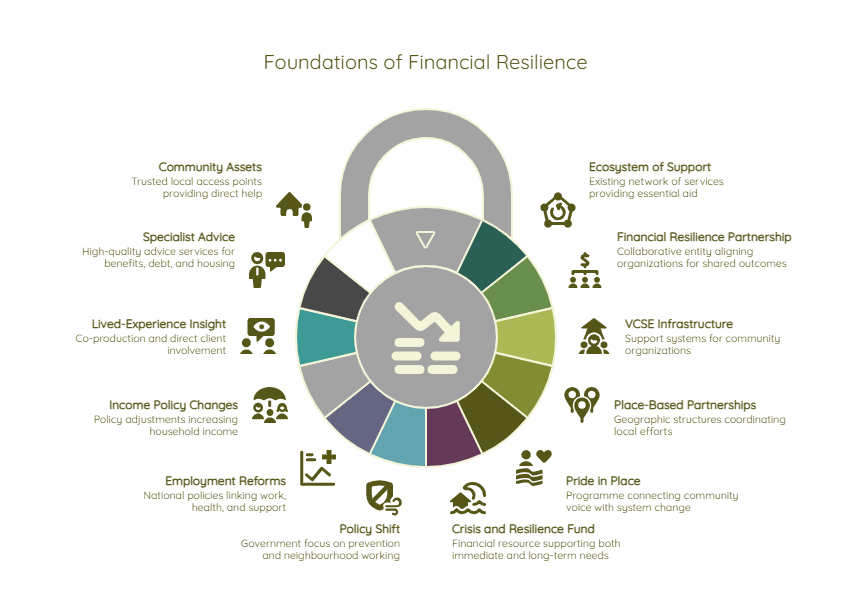
The report describes the Theory of Change as a contribution model. No one service, organisation or funding stream can control every factor affecting financial resilience.
The Financial Resilience Partnership is important because the outcomes sit across advice, crisis support, housing, health, employment, family support and community infrastructure. Its role is not mainly to deliver services directly. Its value is in improving how the wider system functions from the point of view of residents.
The partnership can align organisations around the same outcomes, improve referral pathways, keep lived experience in the work, identify gaps, influence commissioning and make sure crisis support connects into resilience-building services.
- Shared language and outcomes
- Better referral pathways and warm handovers
- Continued co-production and lived-experience challenge
- Alignment with the Crisis and Resilience Fund
- Place-based delivery and neighbourhood intelligence
- A way to keep the Theory of Change alive
Outcomes framework
Six priorities, one connected pathway
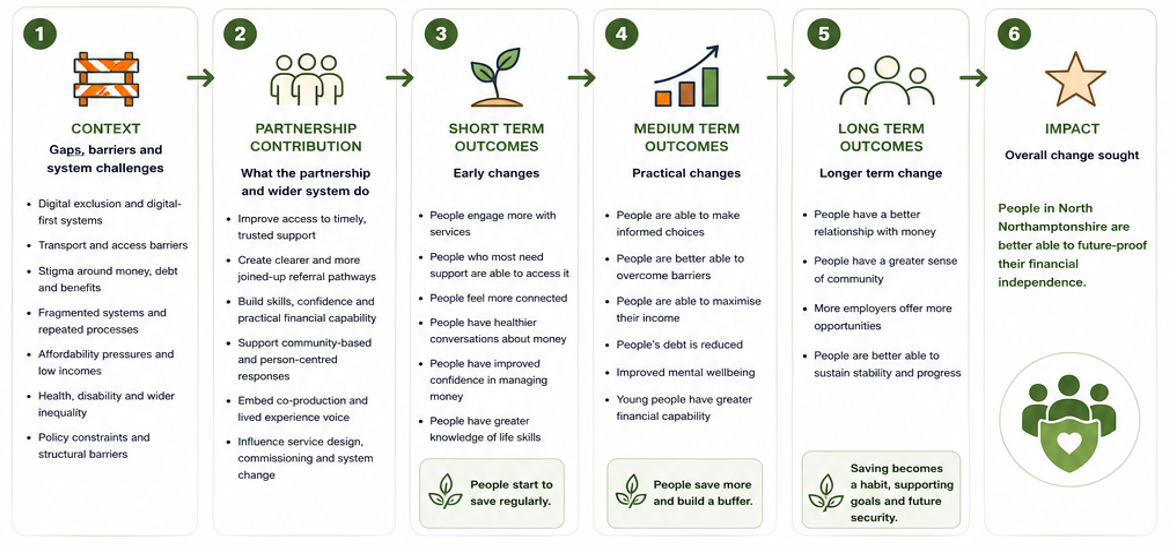
The six priority outcomes are the strategic backbone of the Theory of Change, but they should not be read as isolated boxes. They sit within a wider pathway where early improvements in confidence, access, connection and engagement help people move towards income maximisation, reduced debt, improved wellbeing and greater ability to overcome barriers.
- People have improved confidence in managing money
- People who most need support are able to access it
- People are better able to overcome barriers
- People have less debt
- People are able to maximise their income
- People have improved mental wellbeing
- Earlier changesBetter engagement, clearer access, healthier conversations about money, life skills, confidence and informed choices.
- Middle changesIncome maximisation, debt advice, budgeting support, benefit take-up, tenancy stability and better navigation.
- Longer-term changesMore people are able to withstand shocks, avoid repeat crisis, sustain stability and build a better relationship with money.
- System changesPartners use shared outcomes, shared learning and proportionate data to improve services and commissioning.
Enablers and assumptions
What needs to be true for change to happen
Enablers
- Existing ecosystemNorth Northamptonshire already has advice, housing, health, crisis, food, employment and community support to build on.
- VCSE leadershipA standing partnership can align organisations, maintain momentum and keep the work practical.
- Place-based structuresPlace Based Partnerships, Local Area Partnerships and Pride in Place create routes for targeted local action.
- Crisis and Resilience FundThe CRF creates space for a more preventative model linking crisis support with income, debt, housing and resilience services.
- Trusted access pointsFood banks, warm spaces, libraries, community hubs and local venues can act as early warning points.
Assumptions
- Partners can share one definitionThe work depends on a usable shared understanding of financial resilience.
- Support can be lower stigmaPeople are more likely to seek help early when services feel accessible, timely and non-judgemental.
- Advice is a core driverDebt, benefits and housing advice can materially improve stability, income and stress.
- Pathways matterService quality is not enough if people cannot find support or move between services safely.
- Measurement can stay proportionateProgress needs meaningful indicators that do not create excessive reporting burden.
Governance
Recommended partnership model
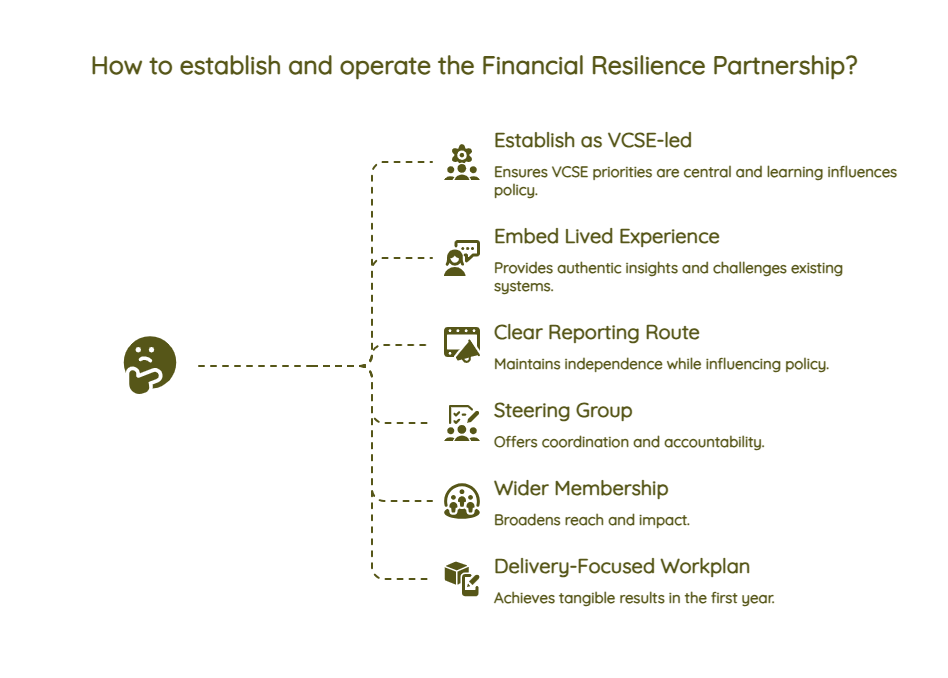
The report recommends a VCSE-led Financial Resilience Partnership with formal links into existing strategic structures so that learning can influence commissioning, service design and local policy.
It recommends that lived experience is embedded in governance, not treated as a one-off engagement exercise. This includes co-design, ongoing challenge, formal representation and paid participation where appropriate.
The suggested leadership model is a small steering group led by the three main FCA-regulated advice organisations in North Northamptonshire: Citizens Advice North Northamptonshire, Community Law Service and Accommodation Concern. Wider membership should include food and crisis support, employability, housing and homelessness, mental health and wellbeing, community finance, VCSE infrastructure and relevant statutory partners.
- Establish the partnership as VCSE-led
- Embed lived experience in governance
- Build a clear reporting route into strategic structures
- Keep the partnership delivery-focused
- Agree a small first-year workplan
- Review progress and refine the Theory of Change after year one
Measuring progress
Proportionate evaluation
The report does not claim the partnership can directly control every factor affecting financial resilience. Instead, it recommends measuring whether the partnership is strengthening pathways, improving access, contributing to better outcomes and influencing system learning over time.
- ImplementationActive partners, attendance, lived-experience participation and progress against the first-year workplan.
- Access and pathwaysPartner referrals, warm referral take-up, waiting times and movement from crisis support into advice or longer-term help.
- Confidence and capabilitySelf-reported confidence, informed choices, life skills and feedback from residents and frontline workers.
- Income maximisationFinancial gains secured, benefit take-up, successful claims or challenges and increased household income.
- Debt and stabilityDebt options accessed, debt reduced or resolved, budgeting plans completed and reduced repeat crisis presentations.
- System influenceService redesign, improved referral arrangements, shared communications, commissioning influence and gaps addressed.
Conclusion
A road map, not a static document
The report concludes that North Northamptonshire is not starting from weakness. There is significant provision across advice, local government, housing, health, community organisations, employment support and the wider VCSE sector. The task is to make that system easier to navigate, more joined up and more preventative.
The Theory of Change gives partners a shared definition, a co-produced outcomes framework and a clearer account of how crisis support, advice, health, community provision and partnership working can contribute to stronger financial resilience over time.
Partnership